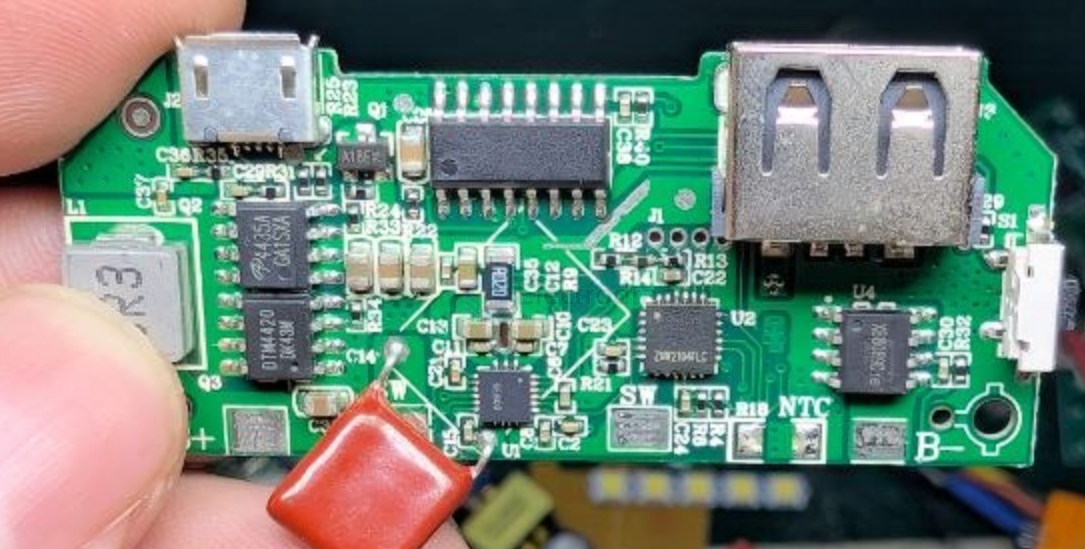
QC
- 100W
- 65W
digital display + QC-dat == 22.5W
products
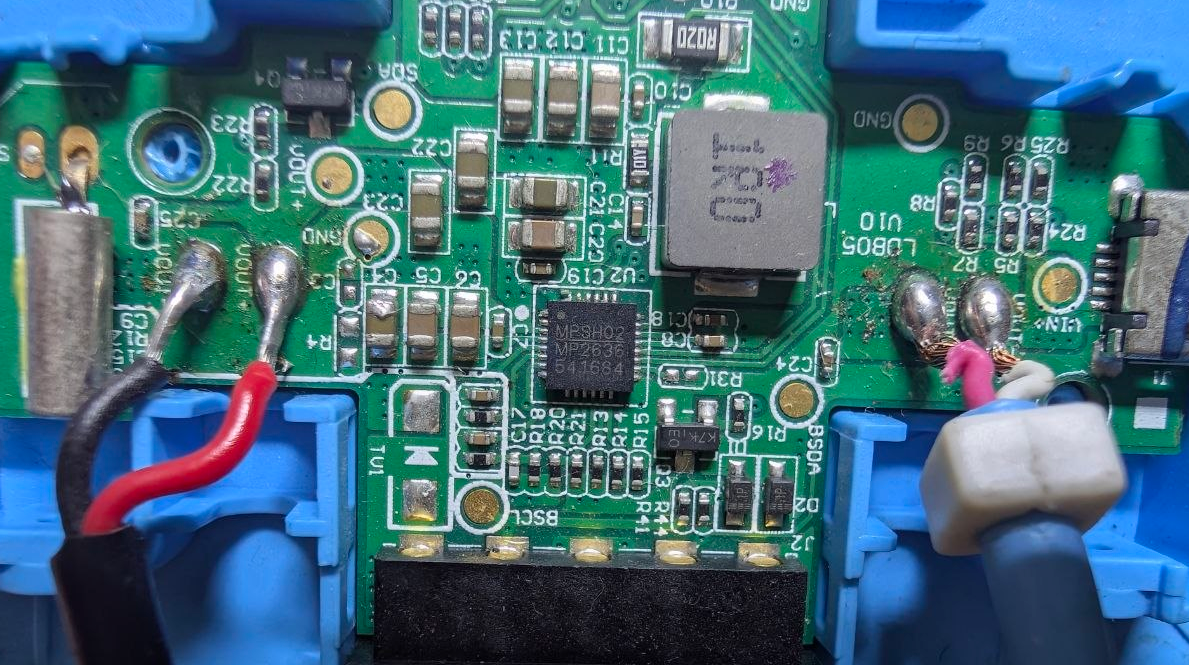
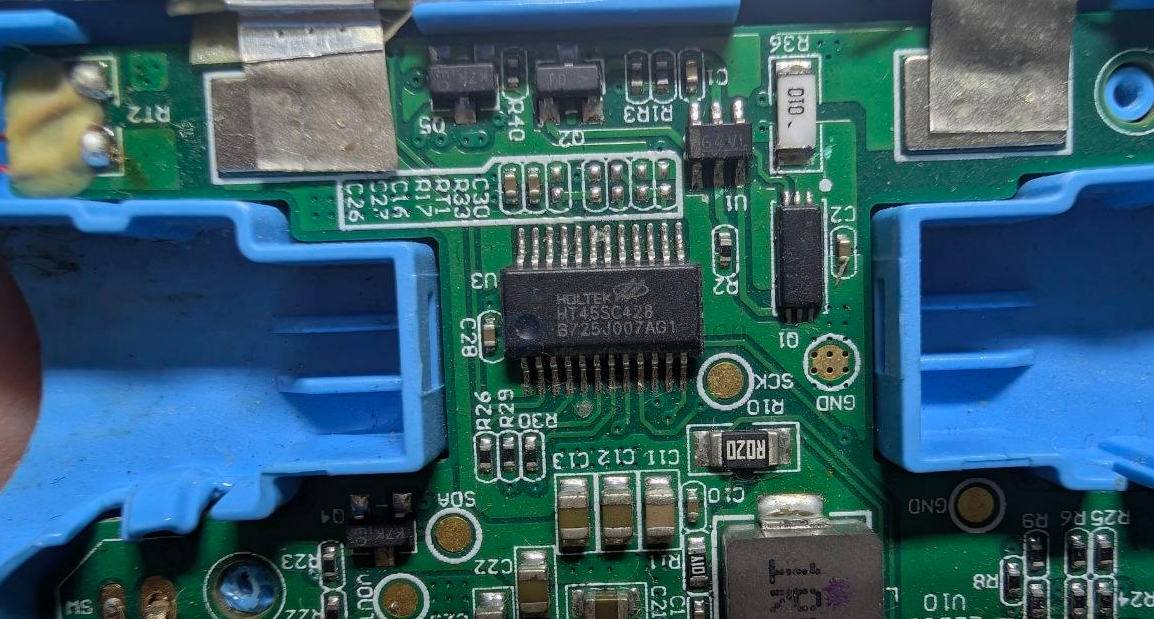
HOLTEK合泰电源总控单片机。== HT45SC428
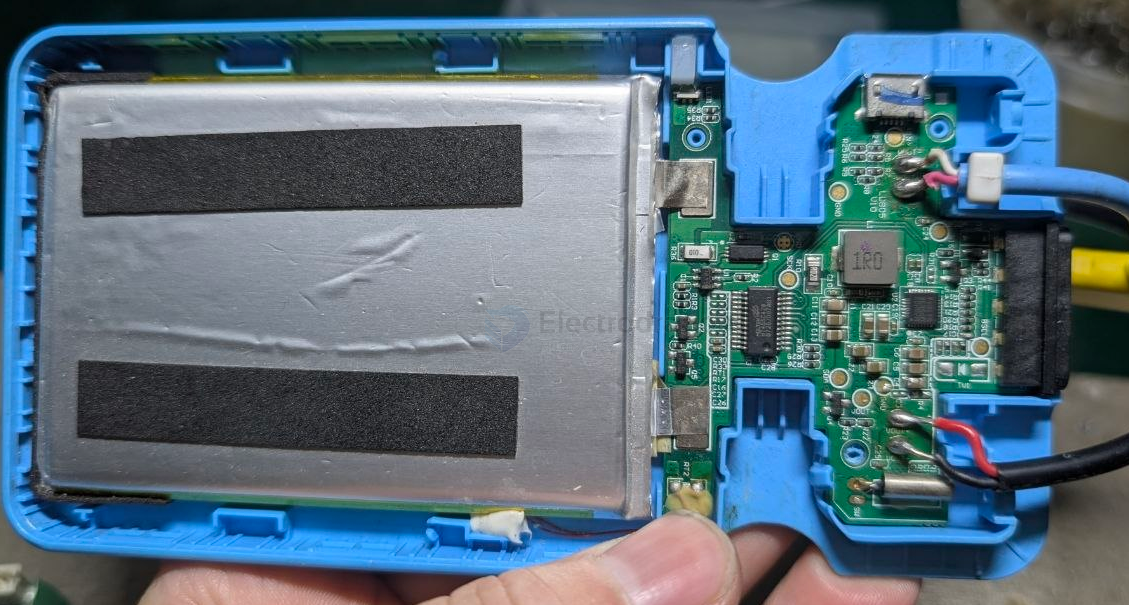
portable-power-bank-dat
How Power Bank Capacity (e.g., 20000 mAh) is Calculated
The capacity advertised on a power bank, such as 20000 mAh, typically represents the total combined capacity of its internal battery cells. Here's the breakdown:
-
Internal Battery Cells:
- Power banks contain one or more individual battery cells, usually Lithium-ion (Li-ion) or Lithium-polymer (Li-Po).
-
Individual Cell Capacity:
- Each internal cell has its own capacity rating, measured in milliampere-hours (mAh). Examples include 2500mAh, 3350mAh, 5000mAh per cell.
-
Parallel Connection:
- To achieve a higher total capacity, these individual cells are connected in parallel inside the power bank.
- In a parallel circuit, the total capacity is the sum of the individual capacities.
-
Calculation Example:
- A 20000 mAh power bank might be constructed using:
- 4 cells × 5000 mAh/cell =
20000 mAh - 6 cells × ~3350 mAh/cell ≈
20100 mAh(often rounded down or marketed as 20000 mAh) - 8 cells × 2500 mAh/cell =
20000 mAh
- 4 cells × 5000 mAh/cell =
- A 20000 mAh power bank might be constructed using:
Key Considerations:
- Cell Voltage: This advertised capacity (e.g., 20000 mAh) is based on the nominal voltage of the internal cells (typically 3.6V or 3.7V).
- Output Voltage & Efficiency: When charging a device, the power bank converts the internal cell voltage to the required output voltage (e.g., 5V, 9V, 12V via USB). This conversion process isn't 100% efficient; some energy is lost as heat.
- Rated Capacity: Because of the voltage conversion and efficiency losses, the actual amount of charge delivered to your device at the output voltage will be lower than the internal cell capacity. This usable output is often listed separately as the Rated Capacity (e.g., "Rated Capacity: 12500mAh at 5V").
ref
build reference
6E803 - unknwon - capacitor-CBB-dat - CP2104-dat - xysemi-dat