PVC tube
- 16 * 1.5mm
- 20 * 1.8mm
- 25 * 2.0mm
- 32 * 2.2mm
- 40 * 2.3mm
- 16 * 1.3mm
- 20 * 1.4mm
- 25 * 1.6mm
- 32 * 1.9mm
- 40 * 2.0mm
small diameter tube
- inner == 3 mm x outter == 5 mm
- inner == 4 mm x outter == 6 mm
- inner == 5 mm x outter == 7 mm
- inner == 6 mm x outter == 8 mm
- inner == 7 mm x outter == 9 mm
- inner == 8 mm x outter == 10mm
- inner == 9 mm x outter == 11mm
- inner == 9 mm x outter == 12mm
- inner == 10 mm x outter == 12mm
- inner == 11 mm x outter == 13mm
inner == 12 mm x outter == 14mm
inner == 13 x outter 15mm
- inner == 13 x outter 16mm
- inner == 14 x outter 17mm
- inner == 15 x outter 18mm
- inner == 16 x outter 19mm
- inner == 17 x outter 20mm
- inner == 18 x outter 21mm
- inner == 19 x outter 22mm
- inner == 20 x outter 23mm
inner == 21 x outter 24mm
outter == 20mm * thickness 2.0 mm
- outter == 25mm * thickness 2.0 mm
- outter == 32mm * thickness 2.4 mm
- outter == 40mm * thickness 2.0 mm
- outter == 50mm * thickness 2.4 mm
- outter == 63mm * thickness 3.0 mm
- outter == 75mm * thickness 3.6 mm
PVC tube build
| Outer diameter | thickness | length |
|---|---|---|
| 6mm | 1mm | [1 meter] |
| 7mm | 1mm | [1 meter] |
| 8mm | 1mm | [1 meter] |
| 9mm | 1mm | [1 meter] |
| 10mm | 1mm | [1 meter] |
| 11mm | 1mm | [1 meter] |
| 12mm | 1mm | [1 meter] |
| 13mm | 1mm | [1 meter] |
| 14mm | 1mm | [1 meter] |
| 16mm | 2mm | [1 meter] |
PVC tube tools
cutter-dat special PVC tube cutter
water tube standard
- 1/4
- 1/8
- 3/8
- 1/2
PVC DN standard
DN = Nominal Diameter (measured in millimeters, mm).
It is a standardized naming system mainly used in ISO, European, and British pipe standards.
Meaning
- DN16 → Nominal Diameter 16 mm
- DN25 → Nominal Diameter 25 mm
Note: DN is an approximate reference size. Actual inner and outer diameters vary by material and pressure rating.
Common Outer Diameters (Example: ISO / PPR / PVC Systems)
| DN Size | Typical OD | Notes |
|---|---|---|
| DN16 | ~20–25 mm OD | Small pipe for irrigation or household plumbing |
| DN25 | ~32–34 mm OD | Common water supply pipe size |
DN vs OD vs ID
- DN → Naming size (not exact)
- OD → Outer Diameter (actual measured size)
- ID → Inner Diameter (depends on wall thickness)
Example (PVC PN16):
- DN25 → OD 32 mm
- DN16 → OD 20 mm
PVC tube under hydrostatic pressure
Overview
Quick reference for hydrostatic pressure effects on PVC tubes and why common PVC piping and joints are unsuitable for deep-water use.
Pressure basics
- Water pressure increases by ~1 atmosphere (≈ 0.1 MPa) every 10 m of depth.
- At 100 m depth the absolute pressure is roughly 11 atm ≈ 1.1 MPa.
Common PVC pressure ratings (internal pressure)
- PN10: rated ~1.0 MPa (≈ 100 m water column)
- PN16: rated ~1.6 MPa (≈ 160 m water column)
Note: These ratings apply to internal-pressure tests (pipe containing pressurized fluid). External hydrostatic pressure (surrounding water pressing inward) is a different loading condition and can be more damaging.
Failure modes under external (deep-water) pressure
- Wall collapse (pipe being crushed inward)
- Deformation at solvent-welded joints
- Micro-cracks or fissures forming near joints
- Joint regions are mechanically weaker than the pipe body and typically fail first
Can ordinary PVC solvent-weld joints survive at 100 m depth?
Short answer: No guarantee. Standard household PVC with solvent-welded joints is not suitable for long-term deep-water use.
Reasons
- Solvent-weld joint strength is usually lower than the pipe material itself — joints tend to fail first under high loads.
- Joints are vulnerable to deformation from external pressure — compression can open gaps in the sealed zone.
- PVC pipe material is not designed for sustained external hydrostatic compression — deep-water loads can produce micro-cracks or permanent deformation.
- Temperature fluctuations cause seal fatigue — large temperature changes (common in deep water) increase stresses at joints and accelerate failure.
Recommendation
For DIY or household use, do not rely on PVC + solvent welding for sustained operation at ~100 m depth. Use purpose-built pressure housings, materials, and joining methods rated for external hydrostatic pressure
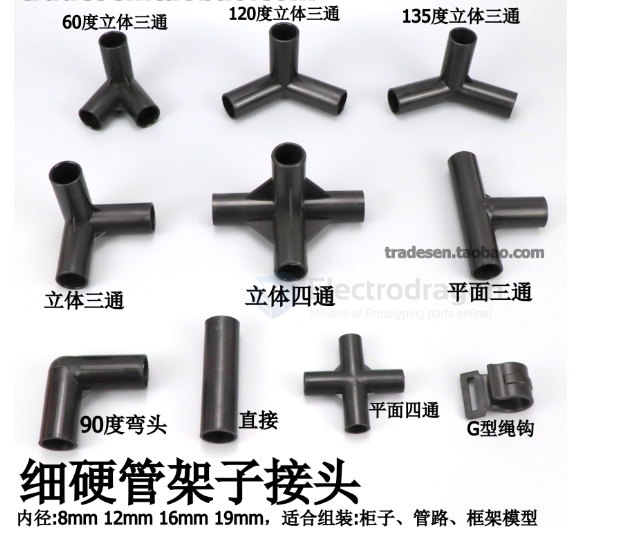
Connector