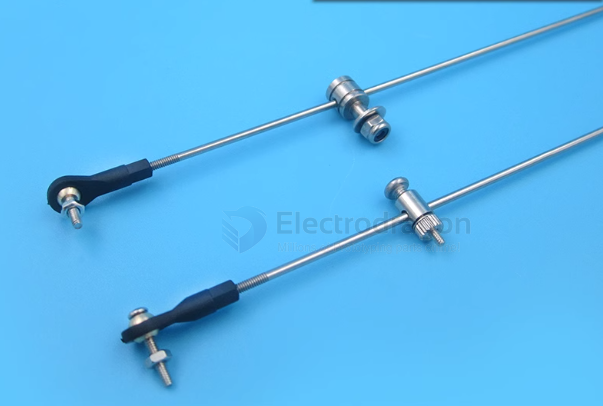
Tie Rod vs Hinge
| Feature | Tie Rod | Hinge |
|---|---|---|
| Function | Transmits tensile force (pulling). | Allows rotational movement around a fixed axis. |
| Load Type | Works under tension, rarely compression. | Works under rotation, may carry vertical/horizontal loads depending on design. |
| Movement Allowed | Linear connection; no rotation at ends unless designed with joints. | Rotational; connects two parts allowing pivoting. |
| Typical Applications | Structural reinforcement, suspension, kinematic linkages. | Doors, lids, flaps, robotic joints, mechanical linkages. |
| Example | Car suspension tie rod, truss tie rod. | Door hinge, laptop hinge, robot elbow hinge. |
Key Difference
-
Tie Rod: Keeps parts aligned and under tension, preventing separation or spreading.
- Hinge: Connects two parts and allows rotation, does not resist tension in a straight line.