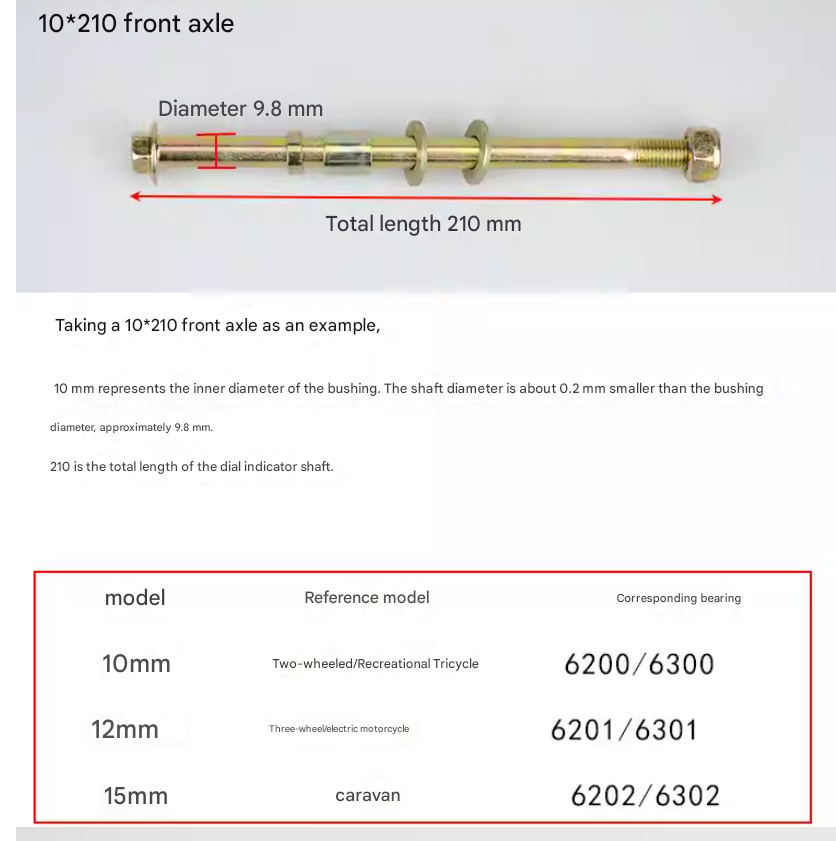
6202 / 6302
6201-2RS / 6301 Bearing Specifications
Technical Breakdown of the Name: 6201-2RS
- 6: Indicates a Deep Groove Ball Bearing (the most common type).
- 2: Represents the Series (Light series; provides a balance between size and load capacity).
- 01: This is the Bore Code. For codes 01, 02, and 03, the sizes are fixed:
- 00 = 10mm
- 01 = 12mm
- 02 = 15mm
- 2RS: Stands for Two Rubber Seals.
Pro-tip: If you see ZZ, it means metal shields. For an electric scooter (outdoor use), 2RS is superior because it keeps water and grime out of the internal grease.
Axle Fit: Ensure your axle is exactly 12mm. If the axle is slightly undersized (e.g., 11.8mm), you may experience "play" or wobbling.
Hub Housing: The hole in your wheel hub must be machined to 32mm. This is usually a "press-fit," meaning it should be tight enough that you need a tool or a rubber mallet to seat it.
6200 / 6300
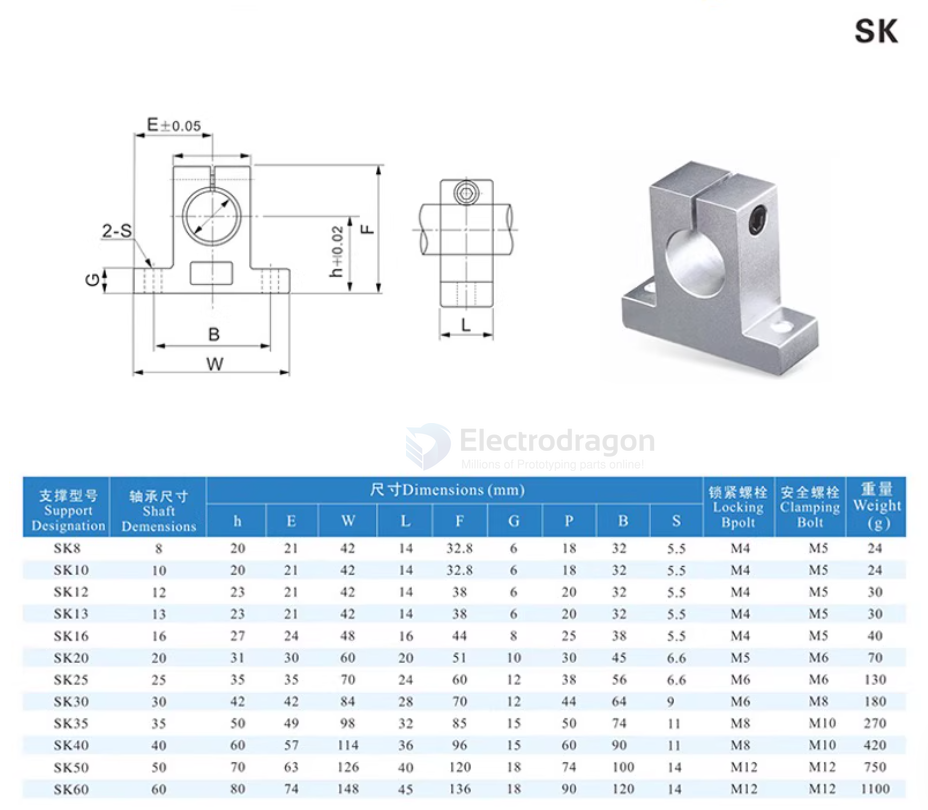
bearing stand
SK series
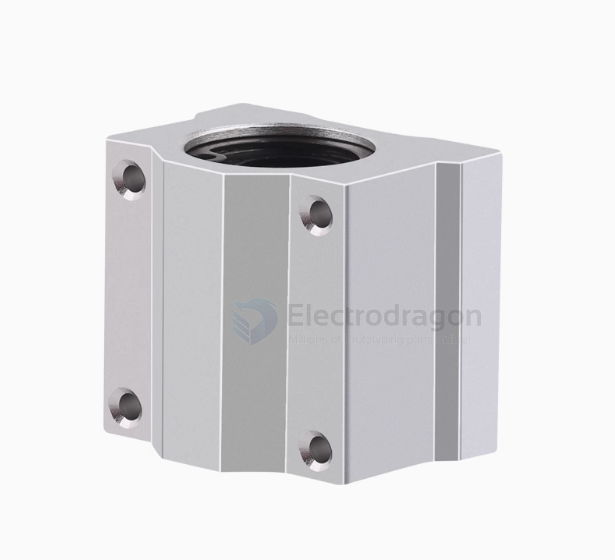
linear bearing
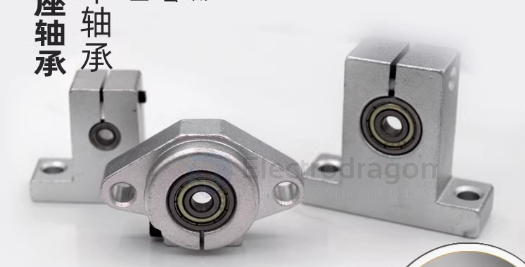
bearing wtih vertical stand
608_Bearing
Here's what "608" means:
- 6 – The bearing type (6 = single row deep groove ball bearing)
- 0 – The bearing series, indicating the robustness (0 = light duty)
- 8 – The bore size, which is 8mm
Basic Dimensions of a 608 bearing:
- Inner diameter (bore): 8 mm
- Outer diameter: 22 mm
- Width (thickness): 7 mm
block the bearing
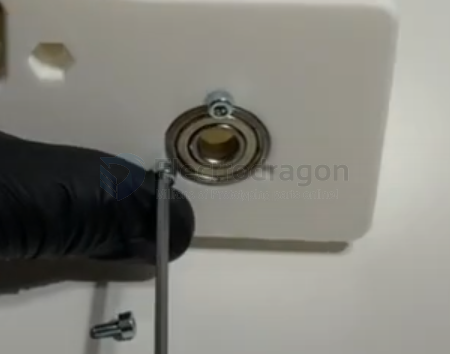
by M3 screws
What is a Bearing?
A bearing is a mechanical component that reduces friction between moving parts and supports rotational or linear motion. Bearings are commonly used in machines, vehicles, and industrial equipment to enhance efficiency and durability.
Types of Bearings
1. Rolling Element Bearings (Most Common)
These use balls or rollers to reduce friction.
-
Ball Bearings 🏀
- Use small balls between inner and outer rings.
- Suitable for high-speed applications.
-
Example: Used in electric motors, bicycles, fans.
- Use small balls between inner and outer rings.
-
Roller Bearings 🎢
- Use cylindrical, tapered, or spherical rollers instead of balls.
- Handle higher loads than ball bearings.
-
Example: Found in conveyor belts, gearboxes, heavy machinery.
- Use cylindrical, tapered, or spherical rollers instead of balls.
2. Plain Bearings (Bushings)
- Do not have rolling elements, relying on smooth surfaces and lubrication.
-
Example: Hinges, automotive suspension systems.
3. Magnetic Bearings 🧲
- Use magnetic fields to support a rotating shaft without physical contact.
-
Example: High-speed turbines, advanced aerospace applications.
4. Fluid Bearings 💧
- Use oil or gas film to eliminate direct contact between surfaces.
-
Example: Hard drives, turbochargers.
Key Functions of Bearings
✅ Reduce Friction → Increases efficiency
✅ Support Loads → Radial (sideways) & axial (thrust) loads
✅ Improve Precision → Smooth motion & alignment
✅ Enhance Durability → Reduces wear on components
bearing apps