- PLC-dat - modbus-dat - RTU-dat
In the dynamic landscape of industrial automation, having a reliable Programmable Logic Controller (PLC) is paramount.
tech
relay-dat - optical-coupler-dat - input-dat - output-dat - analog-dat - digital-dat - HMI-dat - ADC-dat - RS485-dat - RS232-dat - power-dat - 24V-dat - ethernet-dat - network-dat
current-loop-transmitter-dat - current-loop-receiver-dat - ITF1003-DAT - industrial-measurement-dat - transmitter-current-dat
apps
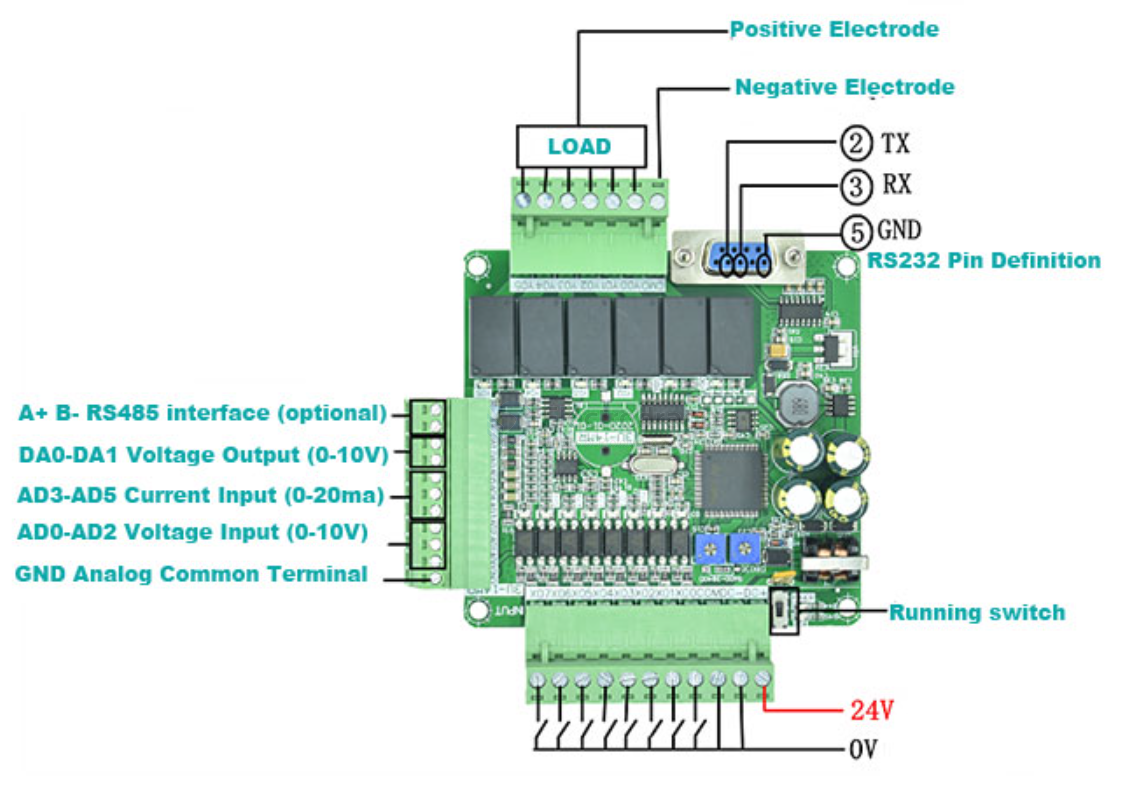
about PLC
PLC (Programmable Logic Controller) is a digital computer used for automation of electromechanical processes, such as control of machinery on factory assembly lines, amusement rides, or light fixtures.
PLC stands for Programmable Logic Controller.
Definition
A PLC is an industrial digital computer designed to control manufacturing processes or machinery. It is widely used in automation to monitor inputs, make logic-based decisions, and control outputs.
Key Characteristics
- Programmable: Custom logic can be created using ladder logic, function blocks, or structured text.
- Reliable and Rugged: Designed for harsh industrial environments (dust, heat, vibration).
- Real-Time Control: Monitors sensors (inputs) and controls actuators (outputs) in real time.
Typical Applications
- Assembly lines
- Packaging machines
- Robotics
- Elevator control systems
- Water treatment plants
Example
A PLC might: 1. Receive a signal from a temperature sensor. 2. Compare it to a threshold. 3. If it’s too high, activate a cooling fan using a relay output.
repo
https://github.com/Edragon/PLC-OPEN