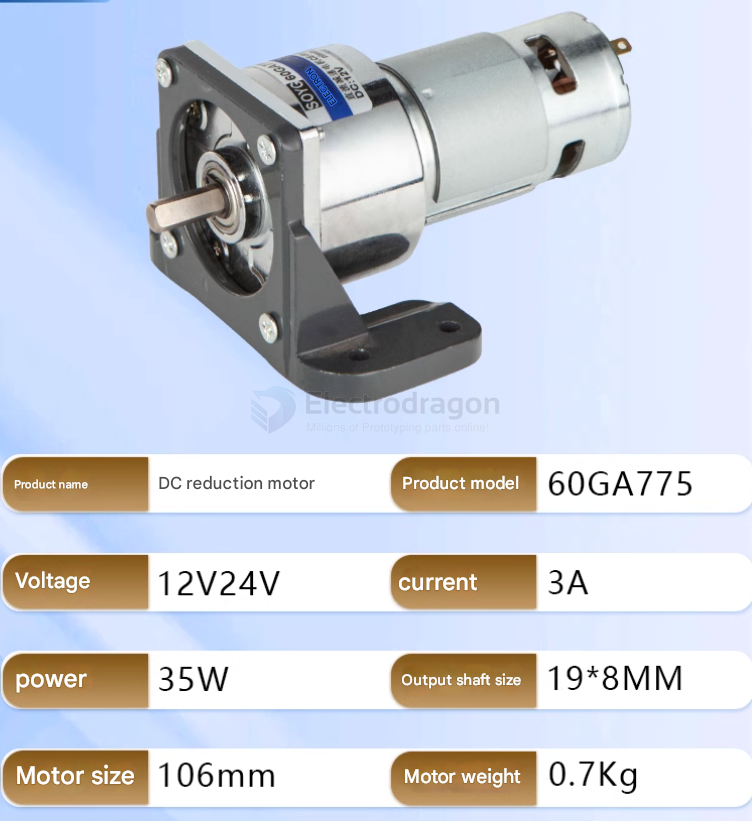
planetary gear motor
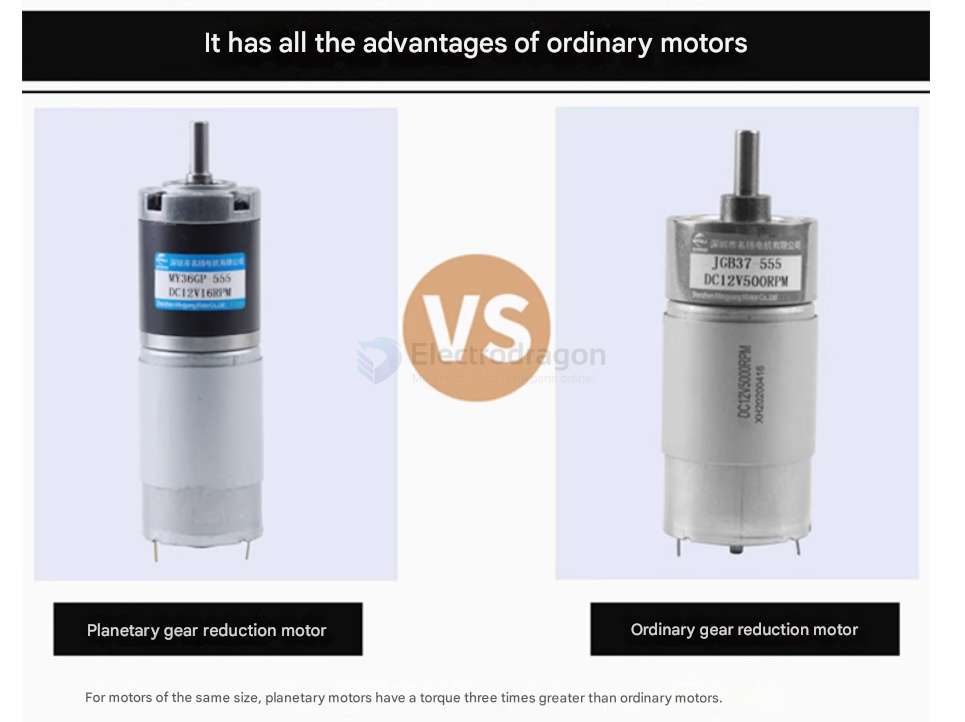
Planetary Gear Motor vs. Normal Reduction Gear Motor Comparison
| Feature | Planetary Gear Motor | Normal Reduction Gear Motor (Spur/Parallel Shaft) |
|---|---|---|
| Gear Structure | Sun gear, planet gears, and ring gear in a concentric design | Simple parallel or linear gear train |
| Torque Capacity | High torque output for compact size | Lower torque for same size |
| Efficiency | High, due to multiple gear contacts and load distribution | Moderate to low, depending on gear stages |
| Size/Compactness | Very compact and space-efficient | Larger footprint for equivalent performance |
| Load Distribution | Load shared across multiple planet gears | Load typically carried by one gear pair |
| Noise Level | Lower noise and vibration | Can be noisy, especially under heavy load |
| Smoothness | Smooth and stable operation | May exhibit more vibration |
| Durability | Durable due to even load and better balance | Wear can occur faster on specific gear sets |
| Cost | Higher due to complex design and tighter tolerances | Lower manufacturing cost |
| Maintenance | Slightly more complex due to enclosed design | Easier to service or replace parts |
| Applications | Robotics, CNC, automotive transmissions, solar trackers | Basic machinery, conveyors, household devices |
driver
motor-reduction-gear-dat
high torque / low RPM motores
N20-motor-dat based on motor-130-dat
motor-TT-dat based on motor-130-dat
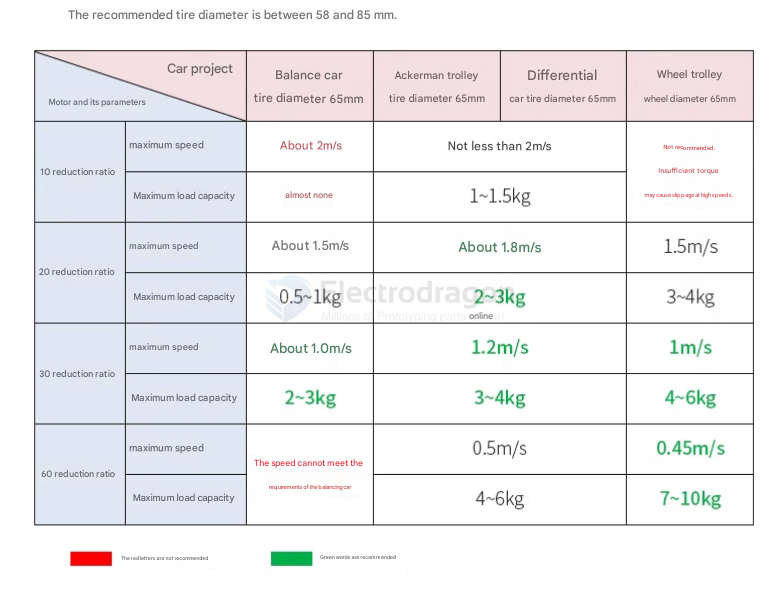
Apps and Specs Selection
Definitions
⚙️ A DC motor that has a gearbox (gear reduction unit) attached to it — usually on the output shaft.
🔧 Why Use a Gear Motor?
| Feature | Effect |
|---|---|
| Lower speed (RPM) | The gearbox reduces the motor’s high speed |
| Higher torque | Gear reduction increases torque at the output shaft |
| Better control | Easier to manage at low speeds (no stalling) |
| Compact design | All-in-one motor + gearbox in one body |
🔁 Example:
- A regular DC motor might spin at 6000 RPM
- With a 50:1 gear ratio, the output becomes ~120 RPM, but with ~50× more torque (minus losses)
If your 895 motor lacks torque even with a gearbox, consider:
- High-torque 24V–36V gear motors, 300W–1000W
- Brands: Zhenlong, MY1016, E-Tek
Use: Robotics, automation, e-mobility, conveyor systems